This page is in English.
Biomethane upgrading
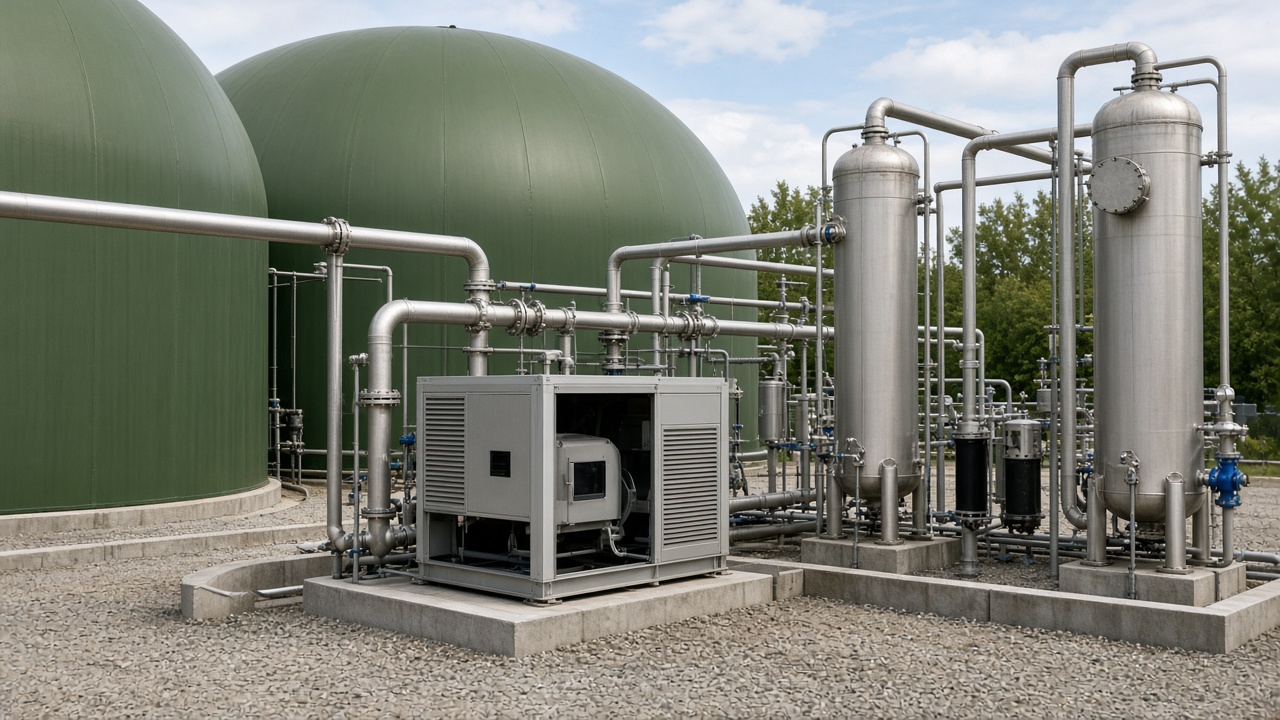
Raw biogas is typically around half methane, with carbon dioxide, water, and hydrogen sulfide. Upgrading raises the methane share. Several types are offered. They are not interchangeable.
- Cascade — a low-cost step. Anaerobic supernatant falls over a series of waterfalls, carbon dioxide escapes, and the methane share rises to 65 percent.
- Membrane — the biogas is compressed and passed through membranes. Compression makes it energy intensive.
- Amine scrubber — carbon dioxide is taken into a solvent. There is no compression. Capital cost is higher and operating cost is lower.
- Hydrogen biomethanisation — renewable hydrogen converts the carbon dioxide into more methane, instead of separating it. That route has its own page.
Hydrogen sulfide is removed before a membrane or an amine contactor. See hydrogen sulfide scrubbers. Liquefaction to bio-LNG follows a route that has already produced a rich gas. The cascade, at 65 percent methane, is not that feed. Upgrading does not create a carbon credit by itself.